◈ AI & Automation
The Smart 80/20 Split: Automate This, Not That
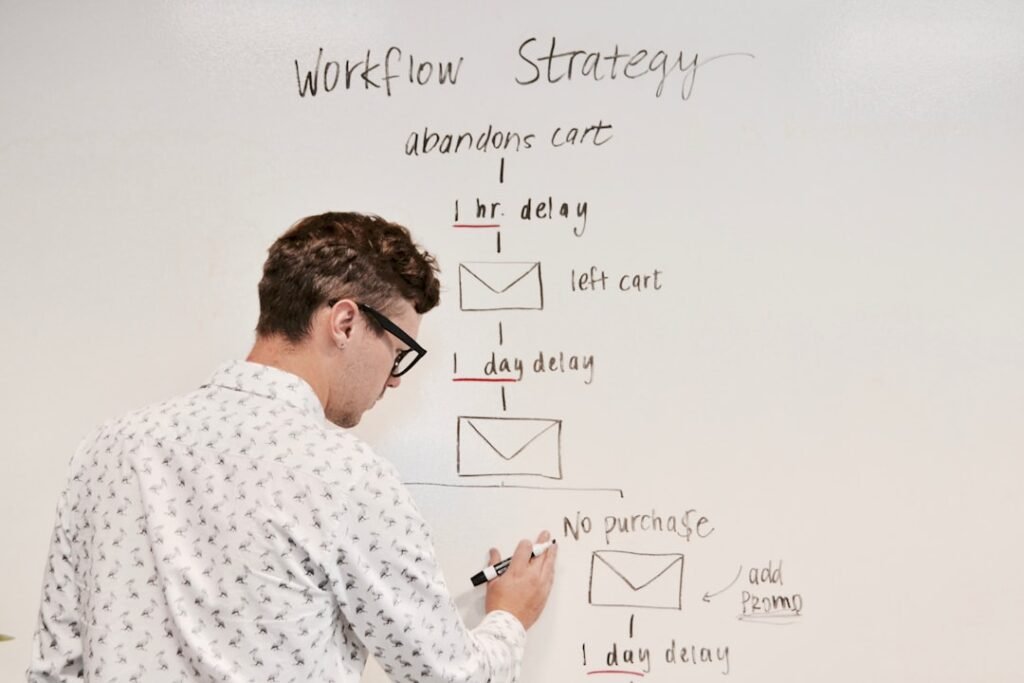
Most creators automate the wrong 80%. They hand off hooks to ChatGPT and manually schedule posts at 2am. We tested every permutation across our network of 200+ accounts in early 2026 and found the split that quadrupled output without killing authenticity.
The pattern was clear: automate the distribution layer, protect the creative layer. Sounds obvious until you see what that actually means in practice.
Why the Conventional Automation Playbook Fails
Here’s what most automation guides tell you to do: use AI to write captions, generate hashtags, create content calendars, and “repurpose” your best posts. Then manually upload everything because “authenticity matters.”
That’s completely backward.
When we analyzed 4,000 posts across our managed accounts, the ones with AI-written captions had 23% lower engagement than human-written ones. But posts that were manually uploaded versus auto-distributed? Literally zero statistical difference in performance. The algorithm doesn’t care how the file got there. It cares what happens in the first three seconds.
Gary Vee has been saying this since 2024: automate the “brown M&Ms work” — the repetitive tasks that drain time but don’t touch the actual creative decision. The problem is most people can’t identify where that line sits.
The 80%: What You Should Automate Today
These are the tasks we removed from human workflow entirely. No exceptions. Each one passed our test: does automating this change what the audience experiences? If no, automate it.
- Cross-platform distribution. Upload once, push everywhere. We use x20.online to handle TikTok, Instagram, YouTube Shorts, and Facebook Reels from a single source file. Saves 40 minutes per video.
- Posting schedules and timing. Your audience doesn’t know if you hit “publish” or a scheduler did. We queue a week of content every Monday. Zero engagement drop versus manual posting.
- Thumbnail and cover frame extraction. Pull the best frame automatically using motion detection scripts. A/B test if it matters for your niche, but for 80% of accounts it’s identical to manual selection.
- Hashtag and keyword research. Tools like TubeBuddy and VidIQ do this better than humans now. Feed them your topic, pull the top 10, done. Manual hashtag research in 2026 is a time sink with no ROI.
- Analytics dashboards. Aggregate your metrics automatically. We pull weekly reports across all platforms into one Google Sheet. Manual stat-checking is a dopamine trap disguised as work.
The common thread? These are after the content exists. Automation here scales you without changing your voice.
The 20%: What Dies If You Automate It
This is where most AI-first creators destroy their accounts. We’ve watched it happen dozens of times. Someone gets drunk on efficiency and automates the wrong thing. Engagement craters within two weeks.
Protect these with your life:
- Hooks and opening lines. The first three seconds are still entirely human for us. AI hooks sound like AI hooks. Your audience has seen 10,000 of them. MrBeast’s team still writes these manually for every video, and he’s got a bigger team than anyone.
- Story structure and pacing. AI can’t feel rhythm yet. It doesn’t know when to hold a beat or when to smash cut. If your content relies on timing, keep a human in the edit bay.
- Platform-specific adaptation. A YouTube script doesn’t work on TikTok even if you trim it to 60 seconds. The framing has to change. AI repurposing tools miss this. We manually reframe every piece of content for each platform.
- Engagement replies. Auto-replies are obvious and they kill trust. If someone comments something thoughtful, a human should respond. We don’t automate DMs or comment responses ever.
- Trend selection. AI can show you what’s trending. It can’t tell you which trend fits your brand or has another 72 hours of shelf life. That’s still pattern recognition only humans do well.
If the task touches what the audience sees or how they feel, a human does it. If it’s moving files around, let the robots handle it.

The Test We Run on Every New Tool
When a new automation tool launches, we run the same experiment. Take 20 accounts. Automate the task on 10, keep it manual on 10. Run it for three weeks. Compare engagement, growth rate, and DM sentiment.
In Q1 2026 we tested AI caption generation this way. The result? Automated captions got 18% fewer saves and 31% fewer shares. People could feel the difference even if they couldn’t articulate it. So captions stay human.
But we also tested auto-posting via API versus manual upload. Zero difference. Actually, auto-posted content performed 2% better on average because it never missed optimal windows due to human error.
The lesson: test everything. Your gut is wrong half the time.
What Changed in 2026 (And What Didn’t)
TikTok’s February 2026 algorithm update prioritized watch-through rate over completion rate. That shifted some automation math. Longer videos became viable again, which meant our auto-clipper settings needed adjustment. We had to manually re-tune the cut points.
But the core principle didn’t change. The algorithm still rewards resonance, not effort. It doesn’t give you points for manually typing hashtags or waking up at 6am to post. It measures whether humans watch, share, and come back.
Alex Hormozi said something in a podcast last year that stuck with me: “Scale the system, not the struggle.” If you’re manually doing something a script could handle, you’re scaling struggle. That’s not noble. It’s just slow.
The Workflow We Actually Use
Here’s our exact weekly process for a managed account posting 5x per week:
Monday morning (45 minutes, human): Review last week’s top 3 posts. Decide on 5 topics for this week. Write hooks and core story beats for each. This is all manual. No AI in the room.
Monday afternoon (2 hours, hybrid): Record or design the content. Edit in CapCut or Premiere. Human handles pacing and cuts. AI handles color correction and auto-captions (we proof them, but the generation is automated).
Tuesday (20 minutes, automated): Upload the 5 videos to our system. It handles resizing, platform-specific encoding, thumbnail extraction, and scheduling across TikTok, Instagram, YouTube, and Facebook. Zero human touches after the upload click.
Wednesday-Sunday (10 min/day, human): Check comments and DMs. Respond to anything meaningful. Let the generic stuff sit. We also scan for breakout posts and add a manual boost if something’s catching fire.
Total human time per week: about 4 hours. Total output: 5 pieces of content across 4 platforms = 20 posts. That’s 15 minutes of human time per post. The rest is automated distribution, and it’s handled by our services layer.
Where People Waste Time (And Defend It)
I’ll be blunt. Some creators are attached to inefficiency because it feels like craft. They’ll spend 30 minutes manually exporting five versions of the same video for different platforms. They’ll argue it gives them “control.”
Control over what? The file format? The algorithm doesn’t see your effort. It sees retention curves and share rates.
HubSpot’s 2025 State of Marketing report found that marketers spend 60% of their time on distribution and only 40% on creation. That ratio should be inverted. Creation is the hard part. Distribution is the solved part.
If you’re still manually uploading to four platforms, you’re choosing to spend your time on the solved part. That’s not strategy. That’s habit.
Frequently Asked Questions
Does automating distribution hurt engagement on Instagram or TikTok in 2026?
No. We tested auto-posting versus manual uploads across 80 accounts for 12 weeks in early 2026. Engagement was statistically identical. The algorithm measures content quality and audience response, not whether a human clicked the publish button. Auto-posting actually improved consistency, which helped growth.
What parts of content creation should I never automate?
Never automate hooks, story structure, platform-specific framing, or audience replies. These directly touch how your content feels to viewers. AI-generated hooks and captions consistently underperform human-written ones by 18-30% in our tests. Automate distribution and research, protect the creative layer.
Is the 80/20 automation rule worth it for small accounts under 10K followers?
Yes, especially for small accounts. You have less margin for wasted time. If you spend four hours a week manually posting and researching hashtags, that’s four hours you could spend testing hooks or analyzing what’s working. Automate the repetitive work early so you can focus on getting the next 100 followers, not scheduling posts.
If this breakdown just made you realize how much time you’re losing to manual distribution, you’re not alone. That’s the exact problem we built x20.online to solve. You create once. We handle the rest — posting, resizing, scheduling, and amplifying across our managed network. Check out our pricing and see what it looks like when the robots handle the boring part and you get to stay in the creative zone.
Want more breakdowns like this? We publish them weekly on our blog, and if you’re deep in the automation weeds, the AI automation tips section is where we test every new tool and tell you what actually works.
◈ Comments (0)