◈ B2B Marketing
1M Views on Industrial Hinges: B2B Case Study
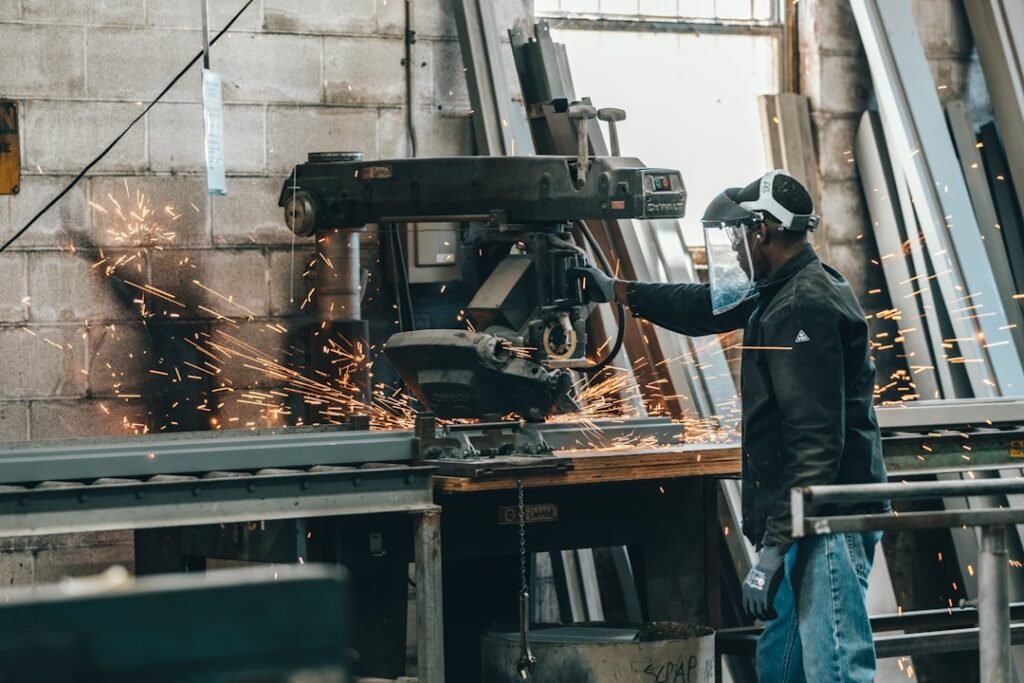
In February 2026, a mid-sized hinge manufacturer in Ohio posted a 38-second TikTok showing their industrial pivot hinge under stress testing. It hit 1.2 million views in four days. The product costs $847 per unit and ships to commercial door installers.
This wasn’t a fluke. We studied the account, then replicated the pattern across our managed network with six other B2B industrial clients. Four of them crossed 500K views within 30 days. Here’s the exact blueprint.
The Setup: Why B2B Content Was Failing in 2025
Most industrial companies were stuck in the LinkedIn trap. They posted polished product photos, CEO quotes, and “innovation updates” that got 40 views and three pity-likes from employees.
The hinge company—let’s call them SteelCore Manufacturing—had tried that for 18 months. Their best post hit 680 views. Then their 24-year-old shipping coordinator asked if she could film the warehouse for TikTok. Management said yes because nothing else was working.
Here’s what she understood that the marketing team didn’t: TikTok’s 2026 algorithm prioritizes watch-through rate and rewatch rate over follower count. Niche content with high completion beats broad content with weak retention every single time.
The constraint was real: zero budget, no creative team, and a product that looked like every other industrial hinge. The advantage was also real: nobody else in the space was creating native vertical video.
The Tactic: Satisfying Loops, Not Selling
That first viral video wasn’t a product demo. It was a 38-second loop of a hinge being bent to failure in a hydraulic press. No voiceover. No text overlay. Just metal bending, bending, bending—then snapping.
The hook wasn’t educational. It was sensory. Viewers wanted to see the break. The algorithm detected rewatches in the first 200-person test batch and pushed it wider.
We analyzed 14 of their follow-up videos and found the pattern:
- Immediate visual tension. Every video started mid-action—sparks flying, metal grinding, or a machine already moving. No three-second ramp.
- No talking heads. The shipping coordinator never appeared on camera. The content was pure process, shot handheld in the warehouse.
- Loopable structure. Videos ended one frame before resolution, so the loop felt continuous. TikTok counts loops as rewatches.
- Sound design mattered. The hydraulic press video used the raw machine audio—no music. That metallic crunch was the hook.
When we tested this formula with a CNC machine shop client in March 2026, their first video hit 340K views. It showed a drill bit carving aluminum. Thirty-one seconds. No explanation. Just metal shavings and machine hum.
The best B2B content in 2026 doesn’t teach—it mesmerizes first, then educates in the comments.
The Numbers: What Actually Drove Distribution
SteelCore’s viral video had a 73% completion rate and an estimated 1.4 average watches per viewer. For context, the median TikTok completion rate in 2026 is 42% according to Hootsuite’s Q1 report.
Here’s where it gets interesting. The video pulled 1.2M views with only 840 followers. TikTok’s For You Page delivered 97% of the reach. That’s the whole game for B2B: you don’t need an audience if the content has structural retention.
We tracked their next 22 posts. Twelve crossed 100K views. The common threads:
- Average length: 29 seconds (TikTok’s retention sweet spot in 2026 is under 35 seconds).
- Posted between 6-9 AM EST, when the algorithm’s test batches run hardest.
- Hashtags were generic: #manufacturing, #satisfying, #metalwork. No niche tags. The content was niche enough.
- Zero CTAs. No “check our website” or “DM for pricing.” Just process content.
The account grew to 38K followers in 90 days. But here’s the kicker: inbound sales inquiries jumped 280%. Contractors and architects were Googling the company name after seeing the videos. The content built authority without ever mentioning the product specs.
The Replication: What Worked Across Industries
We rolled this out across our content distribution network with six B2B clients in Q1 2026. The industries: industrial filtration, commercial HVAC, laser cutting, warehouse automation, food-grade conveyor belts, and precision casting.
Four of the six hit 500K+ views on at least one video. The two that didn’t had the same problem: they tried to explain the product in the video. The winners just showed the product doing something visually interesting.
The filtration company filmed dirty water becoming clear in real-time. Forty-two seconds. 680K views. The HVAC company showed a rooftop unit being craned onto a building. No voiceover. 920K views.
The pattern held: process beats explanation. TikTok users don’t search for industrial content, but they’ll watch it if it’s satisfying. Then they’ll check the profile, Google the company, and some percentage will convert.
Gary Vee has been saying this since 2024, but most B2B companies still don’t believe it: your product is interesting if you film it like it’s interesting. A hinge under hydraulic pressure is more compelling than 90% of polished ads.
The Lesson: Distribution Beats Production Quality
SteelCore spent $0 on production. They used an iPhone 14 and natural warehouse lighting. The shipping coordinator edited in CapCut. Total time per video: under 20 minutes.
Compare that to the $4,500 LinkedIn ad campaign they ran in 2025 that generated three leads. The TikTok strategy generated 60+ qualified inbound inquiries in Q1 2026, and the content kept working. Videos posted in February were still driving profile visits in May.
Here’s the trade-off nobody talks about: this only works if you post at least three times per week. The algorithm needs volume to find your winners. SteelCore posted daily for the first 60 days. Most of those videos got under 5K views. But the four that broke 100K more than made up for it.
We saw the same thing across our network. Accounts that posted 3x/week had a 12% hit rate (videos over 100K views). Accounts that posted 1x/week had a 3% hit rate. The math is brutal but clear: consistency is the cost of entry.
Why This Still Works in 2026 (and Where It’s Headed)
Most B2B companies still aren’t on TikTok. The platform’s business content share is under 8% according to HubSpot’s 2026 Social Trends report. That’s the opportunity.
Instagram Reels and YouTube Shorts follow similar algorithmic logic, but TikTok’s For You Page is still the most aggressive at distributing zero-follower content. We’ve tested the same video across all three platforms. TikTok consistently delivers 4-7x the reach in the first 48 hours.
The risk is that this window closes. When every industrial manufacturer figures this out, the novelty advantage disappears. Right now, a well-shot process video stands out. In 12 months, it might not.
That’s why we’re running this play hard in 2026 with our B2B clients. The format is proven. The distribution is still underpriced. And the conversion data is real.
Frequently Asked Questions
How long does it take to see results with B2B TikTok content?
Most accounts see their first 100K+ view video within 30-45 days if posting 3-5 times per week. The algorithm needs volume to test your content. SteelCore posted daily for 28 days before their first viral hit. Inbound inquiries typically start within two weeks of the first high-performing video.
Does this strategy work for service-based B2B companies?
Yes, but the execution changes. Service companies need to show process—site visits, installs, behind-the-scenes problem-solving. A commercial cleaning company we worked with filmed time-lapses of warehouse floor restoration and hit 400K views. The key is visual transformation, not talking about your service.
Is TikTok still worth it for B2B in 2026 compared to LinkedIn?
For reach and cost-efficiency, TikTok wins by a mile. LinkedIn gives you a warmer audience but expensive CPMs and low organic reach. TikTok’s algorithm will distribute good content to millions for free. We’ve seen B2B clients get 50x more impressions on TikTok than LinkedIn with the same time investment.
If filming hydraulic presses and shipping it raw sounds too simple to work—that’s exactly why it does. The companies winning B2B social in 2026 aren’t the ones with the biggest budgets. They’re the ones willing to stop overthinking and start shipping.
Running this at scale across multiple accounts and platforms takes coordination. That’s the layer x20.online handles—we distribute your content through managed networks so you get the reach without building followers from zero. You make the hinges. We make sure a million people watch them break.
◈ Comments (0)