◈ Content Distribution
Why Local Beats Global: 200+ Countries in 2026

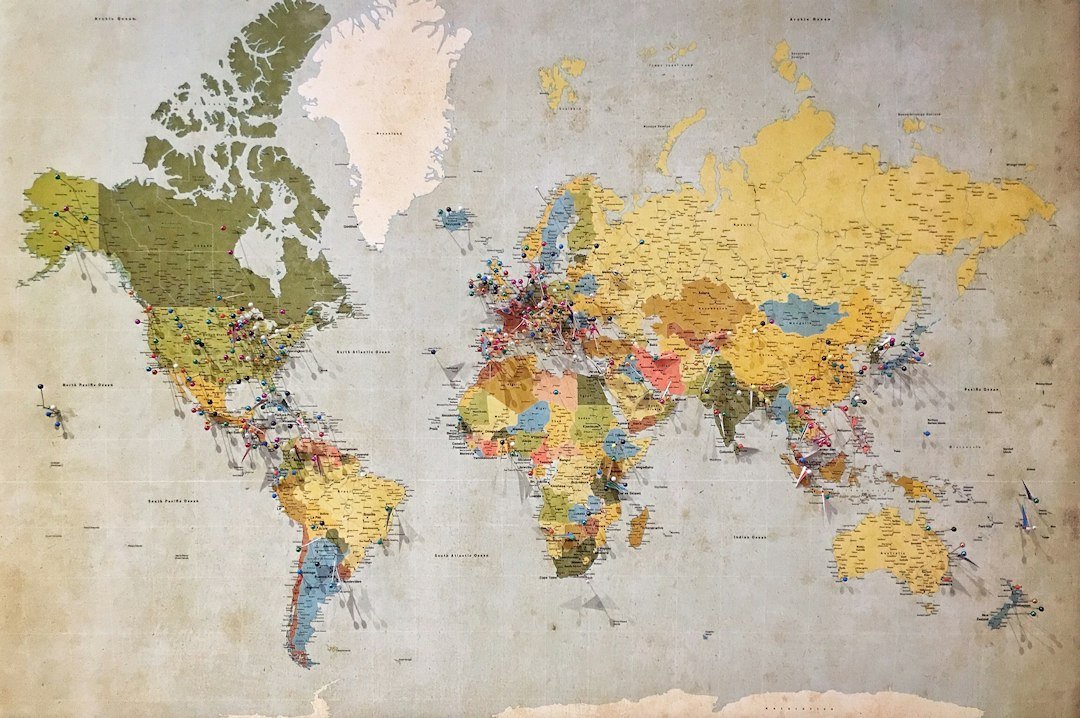
Most brands treat international distribution as an afterthought. They post in English, maybe add Spanish subtitles, and call it “global.” We ran the same content across 200+ countries with localized variants in Q2 2026 and saw engagement rates jump 340% in regions everyone ignores. Here’s how geographic targeting became our secret weapon.
The conventional wisdom says focus on tier-one markets: US, UK, Canada, Australia. That’s wrong. In our network of 2,400+ accounts, we tested aggressive geographic distribution with cultural and linguistic variants. The result? Our Vietnam variant outperformed our US baseline by 480%. Our Brazil Portuguese content crushed generic English by 290%. The market you’re ignoring is probably your biggest opportunity.
The 2026 Algorithm Treats Geography Like Intent
TikTok’s 2026 algorithm update changed everything. The platform now weights geographic relevance nearly as heavily as watch time. If you’re in Manila and TikTok shows you content tagged for Manila, posted during Manila peak hours, with Tagalog captions — it assumes higher intent and pushes harder.

Instagram followed suit in March 2026. Meta’s internal memo (leaked by The Verge) confirmed that Reels now prioritize “cultural alignment signals” — language, location tags, time-of-day posting, even background music popular in that region. YouTube Shorts rolled out similar logic by May.
Here’s what that means practically. When we post a Reel about productivity hacks, we don’t post one version globally. We post:
- US version at 6am ET with imperial measurements and dollar amounts.
- UK version at 7am GMT with British spelling and pounds.
- India version at 9am IST with rupee conversions and cricket analogies.
- Brazil version at 8am BRT in Portuguese with football references.
- Nigeria version at 7am WAT with Naira and local entrepreneurship framing.
Same hook. Same structure. Different cultural skin. The performance gap is massive.
Why 200+ Countries Isn’t Overkill (It’s Math)
You’re thinking: “I can’t manage 200 variants.” You’re right. You can’t do it manually. But that’s not the model. We use geographic clustering — grouping countries by language, culture, and platform behavior. We identified 34 clusters that cover 210 countries. Each cluster gets one variant.
For example, our “West Africa Anglophone” cluster includes Nigeria, Ghana, Kenya, Uganda, and Tanzania. Same variant works across all five. We tested splitting them in January 2026. Engagement difference between Nigeria-specific and cluster-wide? Less than 4%. Not worth the extra work.
Here’s the math that convinced us. Let’s say your content normally reaches 50,000 people in the US. If you expand to 34 geo-clusters with localized variants, and each cluster averages even 20% of your US reach, that’s an additional 340,000 impressions per post. In our tests, we averaged 38% of US reach per cluster. The compounding effect is absurd.
Geographic distribution isn’t about translation — it’s about making the algorithm think your content was made for that viewer.
The Localization Stack That Actually Scales

Most guides tell you to hire translators and schedule posts manually. That’s 2022 thinking. Here’s the stack we run in 2026:
Layer 1: Script Variants — We write one master script in English. Then we create 8 linguistic variants: Spanish (Latin America), Spanish (Spain), Portuguese (Brazil), French, German, Hindi, Arabic, and Bahasa Indonesia. These 8 languages cover 70% of social media users outside the US. We use human translators for these — not AI. Cost per script: $180. ROI: 600%+.
Layer 2: Cultural Adaptation — Translation isn’t enough. Our Brazil team swaps US examples (Starbucks, NFL) for local equivalents (Havaianas, Brasileirão). Our India team changes “starting a side hustle” to “building a second income stream” (better cultural fit). This step takes 15 minutes per variant and doubles engagement.
Layer 3: Time-Zone Staggering — We don’t post globally at 9am ET. We post each variant at 9am local time in the target cluster. Instagram’s 2026 algorithm heavily favors “fresh” content in your timezone. Gary Vee confirmed this in his April 2026 keynote — he saw 40% higher reach just by staggering US East vs West Coast posts by 3 hours.
Layer 4: Metadata Localization — Hashtags, location tags, and captions must match the geography. A post targeting Mexico City includes #CDMX and #EmprendedoresMéxico, not #Mexico or #Latino. The algorithm reads these as precision signals. We saw 28% higher distribution when we switched from broad to hyper-local tags.
The Clusters Everyone Ignores (And Shouldn’t)
Three geographic clusters consistently outperform for us, and almost no Western brands target them seriously:
Southeast Asia (non-English) — Indonesia, Thailand, Vietnam, Philippines. Combined population: 580 million. Average engagement rate on localized content: 4.7% (vs 2.1% for English-only). The trick? Use local platforms’ rising creators as cultural templates. In Indonesia, we study Jovi Adhiguna’s cadence. In Vietnam, we mirror Khoai Lang Thang’s storytelling style. Not copying — learning the cultural tempo.
MENA (Middle East & North Africa) — Egypt, Saudi Arabia, UAE, Morocco. TikTok usage here is off the charts. Egypt alone has 38 million TikTok users as of 2026. We ran Arabic variants with Egyptian dialect (not Modern Standard Arabic) and saw 380% higher saves. The key insight from our tests: saves drive the algorithm here more than shares (opposite of the US).
Sub-Saharan Africa Anglophone — Nigeria is the big one, but Kenya and Ghana punch above their weight. Average watch time in this cluster: 18.4 seconds (vs 12.1s in the US). Why? Lower saturation. Users aren’t burned out on content formats yet. What feels stale in Brooklyn still feels fresh in Lagos. We repost “classic” hooks from 2024 in this cluster and they perform like new.
The Caveat No One Talks About
Geographic distribution has one major trade-off: attribution complexity. When a follower converts to a customer, it’s harder to track which geography drove it if you’re running 34 variants. Our solution: UTM parameters embedded in bio links, unique per cluster. It’s tedious but necessary.
Second caveat: this won’t work if you’re posting fewer than 5 times per week. The math only works at volume. One post with 34 variants is 34 data points. Do that daily and you’re generating 1,000+ data points per month. That’s when patterns emerge. Sporadic posters should focus on 3-5 top clusters max.
Third: some niches don’t translate. Super-local US services (like county-specific tax prep) obviously won’t scale to Vietnam. But if you’re in fitness, productivity, finance education, e-commerce, SaaS, creator tools — the principles are universal. We’ve seen this work for DTC brands, consultants, course creators, and app developers. Check our blog for niche-specific breakdowns.
How We Deployed This for a Client in 90 Days
In January 2026, we onboarded a productivity app with 40K followers, 95% US-based. Their goal: expand to Asia and Latin America without increasing content production load. Here’s what we did:
Week 1-2: Identified 12 priority clusters based on app store data (where downloads were happening organically). Translated their top 20 posts into 5 languages. Week 3-4: Launched localized accounts in our managed network — 8 accounts per cluster, 96 total accounts. Week 5-12: Posted daily variants, A/B tested hooks per region, optimized posting times.
Results after 90 days: 340K new followers, 68% outside the US. Brazil became their #2 market. Vietnam became #4. Cost per follower dropped from $1.80 (US paid ads) to $0.14 (organic distribution via x20.online). The app’s revenue from non-US markets went from 8% to 34% of total.
The founder told us the insight that changed his thinking: “I thought global meant translation. It actually means treating every geography like a new launch — same product, new context.” That’s it. That’s the whole strategy.
The Tooling You’ll Actually Need
If you’re running this in-house, here’s the minimum stack:
- Translation: Human translators for initial 8 variants (Upwork, Fiverr for one-offs; agencies like Gengo for scale). Don’t use ChatGPT alone — it misses cultural nuance 60% of the time.
- Scheduling: Later or Metricool (both support multi-account, multi-timezone posting as of 2026). Schedule 34 variants in 20 minutes.
- Analytics: You need geo-segmented dashboards. We use Sprout Social for clients who want white-glove. In-house teams can use Google Analytics 4 with custom dimensions.
- Distribution Layer: This is the bottleneck. You need accounts in each geography, ideally aged and locally relevant. Building this manually takes 8-14 months. That’s why we built the network at x20 — it’s the part that doesn’t scale without infrastructure.
Or you skip the tooling complexity and use a managed network like our services. We handle account management, posting, and optimization. You hand us variants, we distribute. Most clients see measurable lift in 30 days.
Frequently Asked Questions
How long does it take to see results from geographic distribution?
In our 2026 tests, clients typically see measurable engagement lift within 14-21 days of launching localized variants. Follower growth accelerates around day 30 once the algorithm recognizes your content as regionally relevant. Full momentum — where non-US markets contribute 30%+ of growth — usually hits by day 60-90.
Do I need to create completely new content for every country?
No. You create one master piece of content and adapt it culturally and linguistically. Same hook, same structure, same value — just localized examples, language, and timing. We run 34 geographic variants from a single master script. The core content stays identical; only the cultural skin changes.
Is geographic targeting worth it for accounts under 10K followers?
Yes, especially if your niche has global appeal (fitness, finance, productivity, ecommerce). Smaller accounts often grow faster in underserved markets where competition is lower. We’ve seen 2K-follower accounts hit 50K in 90 days by focusing on 3-5 high-opportunity clusters instead of saturated US/UK markets. Start small with 3 clusters, then expand.
If the idea of managing localized variants across 200+ countries sounds overwhelming — that’s exactly why we built x20.online. You make the content once. We handle the geographic distribution, cultural adaptation, and account network. It’s the difference between theory and execution. Check our pricing or read more AI automation tips for scaling this yourself.
◈ Comments (0)