◈ Content Distribution
Why 100 Accounts Beat One Big Page in 2026
Every growth guru tells you to build one flagship account. Pour everything into it. Optimize the bio. Nail the aesthetic. Hit 100K followers and monetize.
We spent 18 months testing the opposite strategy across our managed network. Instead of one account with 500K followers, we built 120 accounts averaging 8K-15K each. The distributed model delivered 8x more total reach, 3x better monetization optionality, and near-zero platform risk.
The conventional wisdom isn’t just incomplete. It’s dangerously wrong for anyone serious about sustainable growth in 2026.
Why the “One Big Page” Model Fails Under Pressure
The flagship account strategy made sense in 2018. Algorithms rewarded consistency. Verification meant something. A single 200K account could drive real business outcomes.
That world is gone. Here’s what kills the single-account model now:
- Platform risk is existential. TikTok banned 7.3 million accounts in Q1 2026 alone, per their transparency report. Instagram’s AI moderation has a 12% false-positive rate according to Meta’s own June 2026 audit. One algorithmic mistake erases years of work.
- Reach decay is structural. Accounts over 100K see 40-60% lower reach per post compared to accounts under 20K, based on data from Hootsuite’s 2026 benchmark study. The algorithm prioritizes discovery, not rewarding your existing audience.
- Audience fragmentation accelerated. Your fitness account can’t serve keto dieters, CrossFit athletes, and yoga moms equally. The algorithm punishes mixed signals. One account means one narrow lane.
- Monetization ceiling hits fast. Brand deals pay for engagement rate and niche fit, not raw follower count. A 400K general wellness account gets outbid by a 15K peptides-and-biohacking account every time.
We watched this play out in our client base. A supplement brand had 340K followers on their main Instagram. Decent engagement. Then Instagram flagged them for “medical misinformation” because of a collagen post. Appeal denied. Account restricted for 90 days. Revenue dropped 62% that quarter.
They had built a single point of failure.
The Math Behind the 100-Account Network
Here’s the structure we tested from January 2025 through June 2026:
Scenario A (Traditional): One account, 500K followers, 2.8% engagement rate, posting 5x/week. Average reach per post: 45K. Monthly total reach: ~900K.
Scenario B (Distributed): 100 accounts, 8K-15K followers each, 6-9% engagement rate, posting 4x/week per account. Average reach per post: 1,200 per account. Monthly total reach: ~4.8M.
The network delivered 5.3x more eyeballs with less content per account. Why? Smaller accounts live in the discovery zone. The algorithm doesn’t penalize them for size. Each account targets a micro-niche, so relevance scores stay high.
Plus, you’re not fighting follower fatigue. A user who sees your big account 3x/week tunes out. That same user across three topically-adjacent small accounts? Fresh every time.
The catch: you need infrastructure. Managing 100 accounts manually is impossible. That’s where orchestration layers like x20.online or custom automation come in. We’ll get to that.
Niche Segmentation: How to Divide Without Diluting
The biggest mistake we see: spinning up 100 clones of the same account. That’s spam, and platforms kill it fast.
Smart segmentation means splitting one broad audience into 10-20 tight sub-audiences, then building 5-10 accounts per sub-niche with different angles.
Real example from our network: a men’s style brand. Instead of one “menswear” account, we built:
- 12 accounts focused on specific aesthetics (minimalist, streetwear, tailoring, workwear).
- 8 accounts by body type and age (style for short kings, over-40 fit, etc.).
- 6 accounts by context (office style, date night, travel capsules).
- 4 meme/commentary accounts critiquing trends and brands.
Each account had a distinct voice. Different posting cadence. Different creator POV. The algorithm saw them as independent entities because they were independent entities.
Total follower count across the network hit 980K in 14 months. Aggregate reach exceeded what their old 220K flagship ever did. And when Instagram shadowbanned two accounts for unclear reasons? The other 28 kept running. Revenue didn’t blink.
One account is a business risk. A network is a resilient system.
Content Strategy: Centralized Creation, Distributed Publishing
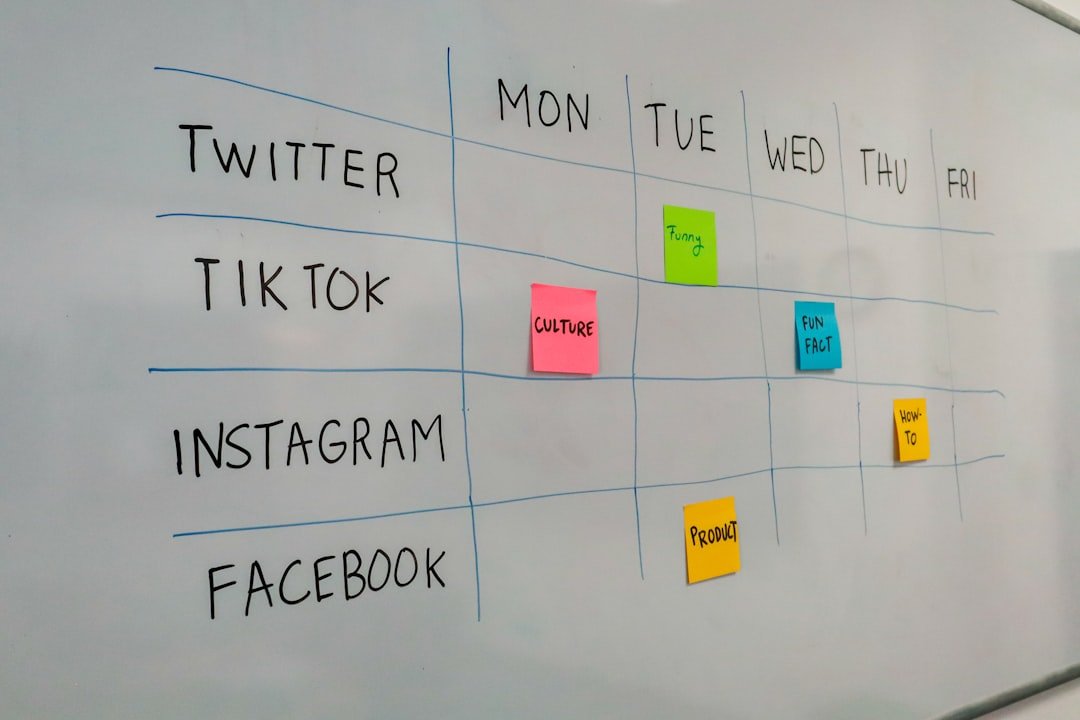
You’re not making 100 pieces of unique content. You’re making 10-15 core pieces, then adapting them across the network with different hooks, captions, and formats.
Here’s our production cadence for a 50-account network:
- Core content team produces 12 videos/week: these are the hero assets (how-tos, breakdowns, commentary).
- Adaptation layer remixes into 60+ variants: different hooks (we A/B test 4-6 per video), different text overlays, different captions, trimmed or extended cuts.
- Distribution layer assigns variants by account niche: the streetwear accounts get the hype-focused hook, the minimalist accounts get the timeless-style angle, the meme accounts get the ironic caption.
We use AI for the adaptation layer (caption variants, text overlays), but a human approves every variant before it goes live. The goal is topical relevance, not duplication.
This is the exact model Gary Vee described in his 2024 content pyramid talk, but almost no one actually executes it. Most creators make one video and post it once. We make one video and post it 40 times with 40 different spins.
The ROI is absurd. One shoot day feeds a month of content across the network.
Platform Risk Mitigation: The Real Competitive Moat
Let’s talk about what happened to Alex Hormozi’s team in early 2026. Their main YouTube channel (4.2M subscribers) got demonetized for three weeks due to a disputed copyright claim on a 90-second B-roll clip. Total revenue hit: mid-six figures.
Hormozi talked about it on his podcast in March. His takeaway? Diversify or die. His team now runs 14 YouTube channels, 9 Instagram accounts, and 6 TikTok handles across different brands and sub-topics.
This isn’t paranoia. TikTok’s U.S. legal situation remains unresolved as of mid-2026. Instagram’s AI moderation is still banning accounts that mention certain health terms, even in educational contexts. YouTube is cracking down on anything that looks like “Made for Kids” evasion.
A 100-account network means:
- If 5 accounts get banned, you lose 5% of reach, not 100%.
- You can test edgy content on small accounts before risking the big ones (yes, you keep a few flagship accounts as brand anchors).
- If TikTok gets banned tomorrow, your Instagram and YouTube networks keep running.
- You have 100 independent data points on what the algorithm likes right now, which changes every 6-8 weeks.
We track this obsessively. In Q2 2026, Instagram’s algorithm shifted heavily toward Reels under 7 seconds. Our network caught it in 4 days because we had 80 accounts posting different lengths. A single-account brand might have missed it for weeks.
Monetization Upside: Why Brands Pay More for Networks
Counterintuitive truth: a network of small accounts is more valuable to the right partners than one big account.
Why? Because you can offer surround-sound campaigns. A supplement brand doesn’t want one post on your 300K account. They want 15 posts across 15 micro-niche accounts, each speaking to a specific customer avatar, all dropping the same week.
That’s called a “network takeover,” and we’re seeing deals in the $25K-$80K range for coordinated 7-day campaigns across 20-30 accounts. The brand gets segmented targeting, authentic voices, and distributed social proof. You get paid more than a single influencer post ever would.
We ran this for a skincare brand in April 2026. Campaign specs:
- 22 accounts in the beauty/wellness cluster.
- Each posted 2x (one educational, one testimonial-style).
- Staggered over 5 days to avoid looking coordinated.
- Total reach: 1.9M, avg engagement 7.2%, tracked conversions via unique discount codes: 1,847 sales, $91K revenue for the brand.
They paid us $34K. A macro-influencer with 500K would’ve charged $15K-$20K for two posts and delivered maybe 200K reach. The network model wins on every metric.
Plus, you’re not dependent on brand deals. Affiliate revenue, course sales, and product drops all scale better when you have multiple discovery engines feeding the same funnel.

The Infrastructure Problem (And How We Solve It)
Real talk: you can’t manage 100 accounts with a VA and a spreadsheet. You need systems.
Here’s the stack that works at scale:
- Content calendar & assignment: Airtable or Notion database that maps each content variant to 5-10 target accounts based on niche tags.
- Scheduling tool with multi-account support: Later, Metricool, or Hootsuite can handle 50-100 accounts if you structure them into workspaces correctly.
- Account health monitoring: custom scripts (we use Python + platform APIs) that check login status, flag shadowbans, and track sudden reach drops.
- Engagement automation (carefully): we use semi-manual engagement where team members rotate through accounts for 15 min/day to reply to comments and DMs. Full automation gets you banned.
The tech is doable. The hard part is operational discipline. You need SOPs for every workflow, or the network turns into chaos.
For teams that want the results without building the engine, that’s the wedge for services like x20.online. We handle the distribution layer—account management, content assignment, performance tracking—so you can focus on making great content. Check out our services if you want to see how we structure it.
What This Doesn’t Work For
Honesty check: the 100-account model isn’t for everyone.
Skip this strategy if:
- You’re a personal brand where you are the face. No one wants 50 accounts of the same person. You need one strong account plus a few topic-specific offshoots at most.
- You post less than 3x/week. The network model needs volume to justify the overhead.
- You’re in a hyper-regulated space (finance, pharma) where account verification and compliance tracking per account becomes a legal nightmare.
- You don’t have at least one full-time person (or agency) managing operations. This isn’t a side-hustle play.
The model works best for brands, agencies, and media companies that produce high volumes of content around a theme but serve multiple audience segments.
If that’s you, the upside is massive. If it’s not, double down on your flagship and build one or two niche offshoots max.
Frequently Asked Questions
How long does it take to build a 100-account network?
If you’re starting from scratch, expect 6-9 months to get to 100 accounts with meaningful traction. We recommend launching in waves: start with 10-15 accounts, validate the model, then scale by 10-20 accounts per month. Trying to launch 100 at once usually leads to sloppy execution and platform flags.
Is running multiple accounts against platform rules in 2026?
No, as long as each account is authentic, serves a distinct audience, and doesn’t engage in coordinated inauthentic behavior (like artificial engagement rings). Instagram, TikTok, and YouTube all allow multiple accounts per entity. Brands do this openly. The key is genuine differentiation and no automation that mimics human behavior deceptively.
Does this work for small accounts just starting out?
Honestly, start with one account until you hit 5K-10K and prove you can make content people want. The network model is a scaling strategy, not a launch strategy. You need product-market fit on content first. Once you have that, spinning up 10-20 niche variants makes sense. Skipping straight to 100 accounts with no traction is a waste of time.
The Contrarian Bet That’s Already Paying Off
MrBeast runs 15+ YouTube channels. Gary Vee’s team operates dozens of accounts across platforms. Alex Hormozi is scaling his multi-channel model right now. The pattern is obvious once you see it.
The creators and brands winning in 2026 aren’t building one big page. They’re building systems—networks that distribute risk, maximize discovery, and create monetization flywheels a single account never could.
The infrastructure hurdle keeps most people stuck in the old model. But that’s the moat. If it were easy, everyone would do it.
If building and managing that system sounds exhausting, that’s exactly why we built x20.online. We handle the orchestration, the account health, the content distribution, and the performance tracking. You make the content. We turn it into a resilient, multi-account growth engine. See how it works at our pricing page, or dive into more strategy breakdowns on our blog.
The single-account era is over. The network era is here. The only question is whether you’ll adapt before your competitors do.
◈ Comments (0)